

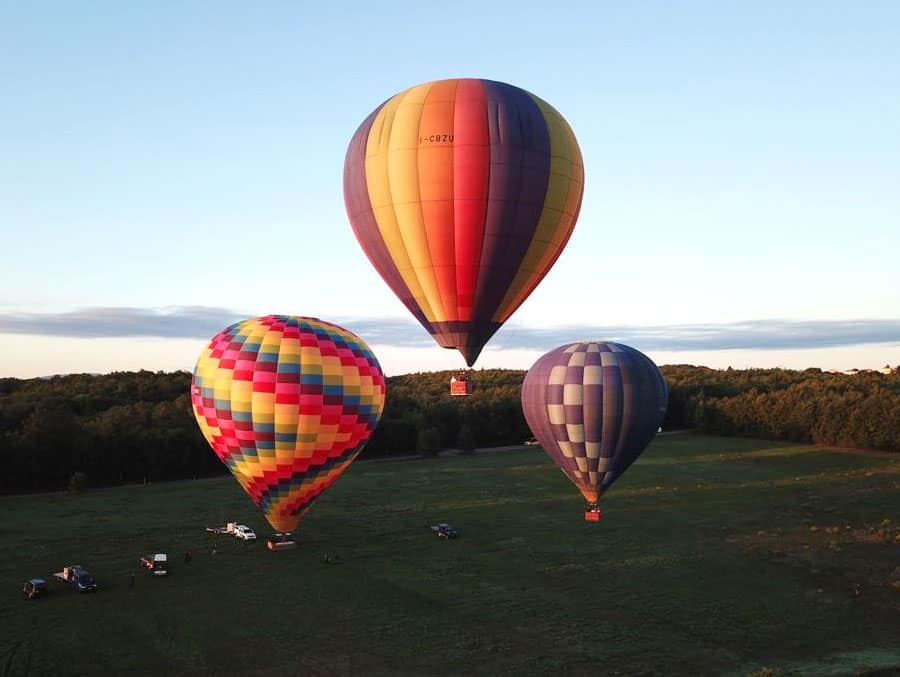
It’s natural to feel a bit apprehensive before stepping into a hot air balloon, especially if it’s your first time. Many people wonder how safe a hot air balloon really is or whether hot air ballooning is dangerous.
The reality is that hot air ballooning is one of the safest forms of transportation in the world, not only among aircraft but even when compared to ground-based transport. Like any activity, there is a margin of risk, but in the case of hot air balloons these risks are extremely low and carefully managed.
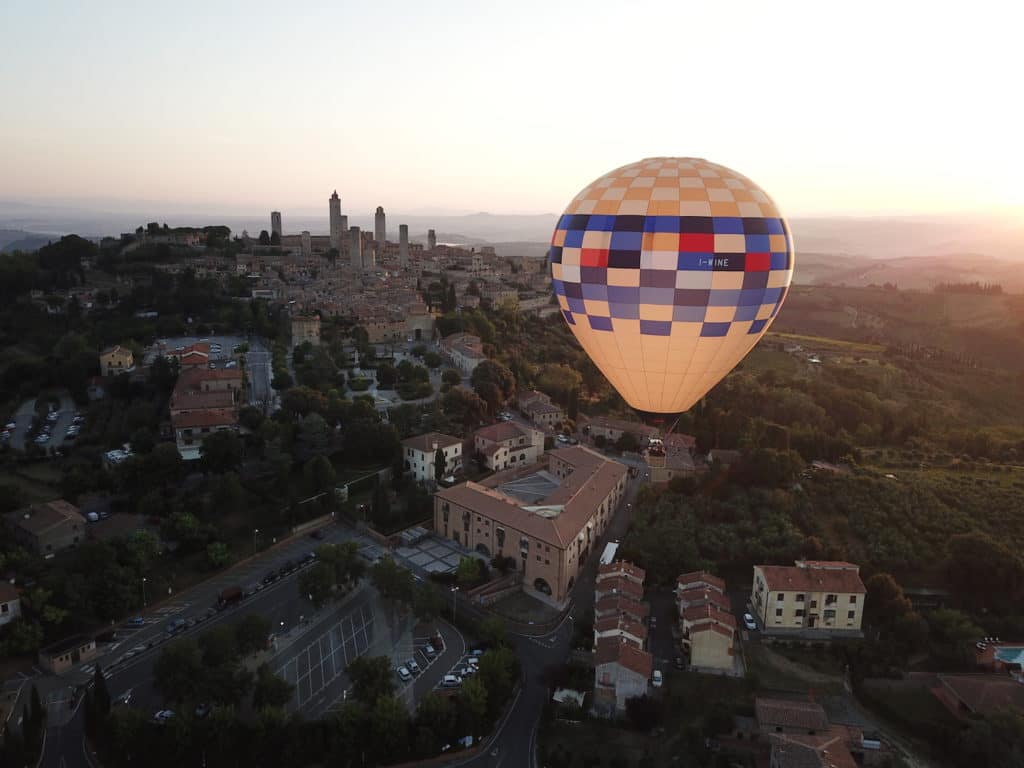
Why hot air ballooning is so safe
The safety of a hot air balloon comes first and foremost from its simple and natural operating principle. The large nylon envelope rises when filled with hot air and descends gently as the heat is reduced.
There is no real sense of speed: the hot air balloon does not accelerate, make sharp turns, or perform complex maneuvers. It is carried smoothly by the wind, as if floating in the air.
The pilot controls only the vertical movements, while horizontal motion is gentle and free of jolts.
It is precisely this absence of sudden maneuvers that makes hot air balloon flight extremely stable and, in many respects, even safer than an airplane.
Now that you know how safe it is to fly in a hot air balloon, you can start imagining your experience.
What happens in case of a malfunction? Safety guaranteed
One of the most common questions concerns emergencies: what happens if the burner goes out or the fuel runs out?
Even in this extremely rare event, hot air balloon flight safety remains guaranteed. The balloon continues to support the basket and allows for a gradual and controlled descent, functioning like a natural giant parachute.
Hot air balloon landings take place without dangerous situations for passengers, thanks to the pilot’s training and the very nature of the aircraft itself.
Weather, technology, and inspections: what makes hot air ballooning safe
No risk of balloon fire
Another common concern involves the possible risk of a hot air balloon catching fire, but this fear is unfounded.
The burner is designed never to come into contact with the balloon fabric, and the flame is always directed inward.
The only theoretical risk could be contact with power lines, but even in this case the likelihood is virtually zero. Routes are planned with extreme care, and the pilot has full control over altitude, avoiding any obstacles.
Certified materials and experienced pilots
Modern hot air balloons comply with very strict aeronautical regulations and are built using highly resistant materials.
The cables connecting the envelope to the basket, for example, are made of Kevlar, one of the strongest materials available, which does not conduct electricity in the event of accidental contact.
Each flight is carried out only after thorough inspections and can be operated exclusively by certified and experienced pilots, trained to fly only under conditions of complete safety.
Pregnancy and special situations: what you need to know
When it comes to special situations such as pregnancy, altitude itself is not an issue. However, in general it is not recommended to fly in a hot air balloon during pregnancy, especially in the later stages.
The reason is not the flight itself, but the possible dynamics of the landing, which can be slightly bumpy. In such cases, it is always preferable to postpone the experience to a more suitable time.

The fundamental role of weather in hot air balloon safety
Weather conditions are one of the most important factors in ensuring safety.
In the presence of:
- rain
- wind
- fog
- thunderstorms
hot air balloons are not authorized to take off. Flights are carried out only when weather conditions are completely favorable, ensuring maximum peace of mind for both pilots and passengers.
It is no coincidence that in Italy there are no recorded fatal accidents involving hot air balloons, while statistics on road accidents unfortunately tell a very different story.
Would you like to know how a hot air balloon flight takes place?
Statistics and comparison: why hot air ballooning is safer than you think
When people ask how safe a hot air balloon is, it is helpful to look at the data and compare it with other means of transport.
Statistics show that hot air ballooning has an extremely low accident rate, especially when compared with driving on the road or with other outdoor sports.
This is because:
- flights take place only in ideal weather conditions
- there are no high speeds
- there are no sudden maneuvers
- each flight is planned well in advance
Unlike cars used daily, often in less-than-optimal conditions a hot air balloon never takes off unless all safety conditions are met.
It is precisely this cautious approach that makes hot air ballooning one of the safest forms of flight in the world, despite being perceived as “extreme” by those unfamiliar with it.
In fact, many passengers report after landing that they felt more relaxed in a hot air balloon than in an airplane or a car, thanks to the stability of the flight and the complete absence of jolts or turbulence.